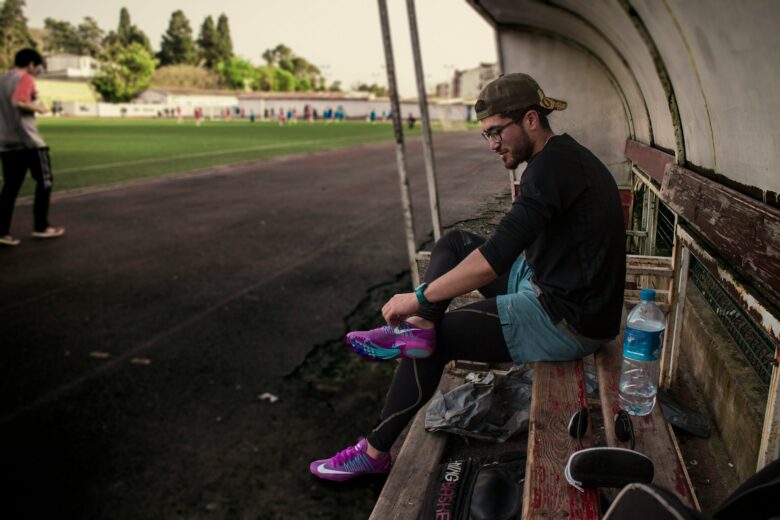
The final seconds have already passed. The crowd noise has thinned into a dull roar, teammates are walking toward the locker room, and the scoreboard is no longer changing. Yet for one athlete, the game has not ended. It has only begun again, privately, in the mind. A missed shot, a mistimed pass, a fraction of a second too late. This is the emotional weight athletes carry after the game, long after fans have moved on to the next headline.
The Moment That Refuses to Stay in the Past
A missed shot is rarely just a missed shot. In real time, it lasts less than a second. In memory, it can stretch into hours, days, or entire seasons. Athletes often replay the moment with merciless precision, seeing angles that no longer exist and hearing sounds that are already gone. The body may be exhausted, but the mind remains alert, searching for an explanation that will bring relief.
What makes this moment so heavy is not failure itself, but finality. There is no immediate second chance, no reset button. The game is over, and the responsibility feels personal. Even in team sports, the mind isolates the error and attaches identity to it. I missed. I failed. I let them down. These thoughts arrive automatically, without permission, and they often arrive when the athlete is most vulnerable.
Identity and Performance Become Entangled
For many athletes, sport is not just something they do. It is something they are. Years of training, sacrifice, and recognition slowly weave performance into identity. When a shot is missed at a critical moment, the mind does not simply evaluate the action. It questions the self.
This is why post-game emotions can feel disproportionate to the event itself. On the surface, it may look like one error among many. Inside, it can feel like a verdict. Athletes who care deeply often struggle the most because effort magnifies expectation. The more something matters, the louder the internal response becomes when it goes wrong.
This entanglement of identity and performance is rarely addressed publicly. Fans are taught to analyze outcomes, not inner lives. Yet within locker rooms and quiet car rides home, this is where the real contest continues.
The Silence After the Noise
One of the hardest transitions after a game is the sudden absence of structure. During competition, everything is clear. The rules are defined, the roles are known, the clock provides boundaries. When the game ends, that clarity dissolves.
What replaces it is silence. Not always literal silence, but psychological space. In that space, the missed shot grows louder. There are no drills to distract, no teammates calling out assignments, no immediate task demanding attention. This is when emotion settles into the body. Shoulders tighten. Breathing shortens. Sleep becomes difficult.
Athletes often describe this period as heavier than the moment itself. The miss is done. The aftermath is endured.
Responsibility Without Control
A unique cruelty of sport is the way it teaches responsibility without guaranteeing control. Athletes are taught to prepare meticulously, to trust their technique, to commit fully. They do all of this knowing that the outcome can still betray them.
After a missed shot, the mind searches for what could have been controlled. Was my foot placement off. Did I rush. Should I have passed. This search is natural, but it can quietly turn into self-punishment. The athlete assumes full ownership of an outcome shaped by countless variables, many of which were never theirs to command.
This burden of responsibility is rarely shared evenly in the mind, even when teammates or coaches attempt to distribute it. Emotion does not follow logic. It follows meaning.
Shame Versus Guilt
There is an important emotional distinction that often emerges after a critical mistake. Guilt focuses on the action. Shame focuses on the self. Athletes who remain psychologically healthy tend to experience guilt. They think about what they did and how they might improve. Athletes who struggle tend to slip into shame. They think about who they are.
A missed shot can become a mirror that reflects a harsh internal narrative. Not good enough. Not clutch. Not reliable. These labels stick easily because they sound definitive. They promise certainty in a moment of emotional chaos.
The danger is that shame narrows perspective. It turns one moment into a character judgment. Over time, this can erode confidence and enjoyment, transforming competition into a constant test of worth rather than a pursuit of excellence.
The Public Gaze and Private Pain
Modern athletes carry an additional layer of weight that previous generations largely avoided. The public gaze no longer ends at the stadium gate. Social media, commentary shows, and instant analysis ensure that a missed shot is replayed, debated, and often mocked.
Even athletes who claim to ignore external noise are affected by its presence. Knowing that a moment will be dissected publicly adds pressure before it happens and intensifies self-criticism afterward. The athlete becomes both the performer and the audience, judging themselves through imagined eyes.
This external amplification can distort emotional recovery. Instead of processing the experience internally, athletes may feel compelled to defend, explain, or withdraw. The missed shot stops being a moment and becomes a story, one the athlete did not choose to tell.
Learning Without Self-Destruction
At its healthiest, reflection after failure is constructive. Athletes identify patterns, refine technique, and grow. At its unhealthiest, reflection becomes rumination. The difference lies in intention.
Constructive reflection asks what can be learned. Rumination asks what is wrong with me. The first opens the future. The second traps the mind in the past. Unfortunately, the line between them is thin, especially when emotions are raw.
Many athletes are never taught how to process mistakes emotionally. They are taught how to fix mechanics, not how to sit with disappointment. As a result, they often oscillate between forced positivity and silent self-criticism, neither of which truly resolves the weight they carry.
Why the Best Care the Most
It is tempting to assume that emotional weight is a sign of weakness. In reality, it is often a sign of investment. Athletes who feel deeply about missed opportunities usually do so because they care deeply about their craft, their team, and their standards.
The goal is not emotional numbness. The goal is emotional integration. The missed shot matters, but it does not define. The pain is acknowledged, but it does not become identity. This balance is difficult and requires maturity, support, and time.
Veteran athletes often speak about learning to feel disappointment without drowning in it. They still hurt, but they recover faster. Not because the stakes are lower, but because perspective has widened.
Carrying the Weight Forward
Eventually, the missed shot finds its place in memory. It may return unexpectedly, triggered by a similar situation or a quiet moment alone. But over time, its intensity softens. It becomes part of the athlete’s story rather than the headline.
What athletes carry after the game is not just regret. They carry lessons, resilience, and a deeper understanding of themselves. They learn where their confidence wavers, where their preparation holds, and where their humanity shows.
Sport, at its core, is an emotional education disguised as competition. Every missed shot teaches something, even when it hurts too much to articulate immediately.
The Human Side Fans Rarely See
From the outside, it is easy to demand accountability and quick recovery. Fans want redemption arcs and decisive answers. What they often overlook is the quiet, internal work that precedes visible resilience.
Athletes are not machines processing data. They are people processing meaning. A missed shot can echo because it touches hopes, fears, and years of effort compressed into a single moment.
Understanding this does not excuse poor performance, nor should it. But it humanizes it. It reminds us that excellence is built not only on success, but on how one carries failure when no one is watching.
After the Lights Go Out
When the arena empties and the lights dim, the athlete remains. The missed shot may still be there, waiting in the background. Over time, it either becomes a wound or a reference point. The difference lies in how it is carried.
Those who learn to carry it with honesty rather than cruelty often return stronger. Not because they forget, but because they remember without being consumed. The weight never fully disappears. It changes shape.
And in that quiet transformation, the athlete grows not just in skill, but in depth.