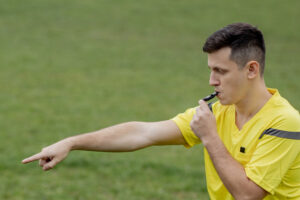
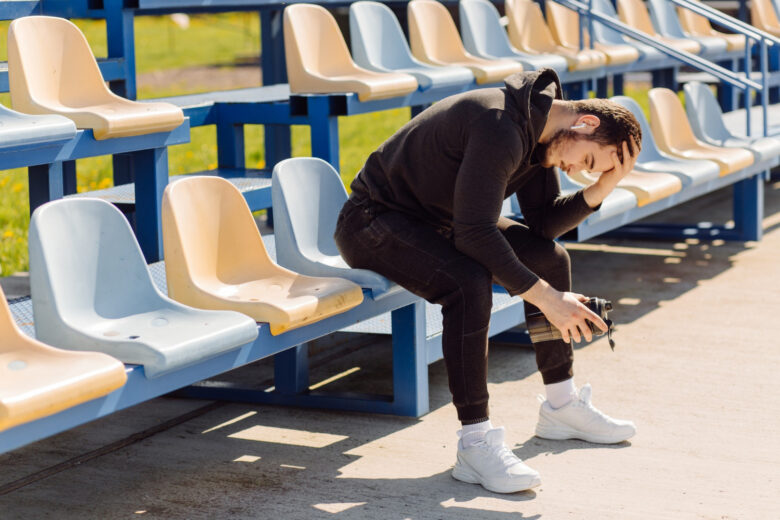
When the final whistle sounds, the scoreboard freezes the result, and the crowd begins to thin, something intangible settles over the arena. It is not simply quiet. It is a different kind of presence, one that athletes feel more than hear. The noise of competition disappears quickly, but the emotional residue of defeat lingers, heavy and unresolved, following players into spaces where there are no chants, no cameras, and no applause to lean on.
The Abrupt End of Structure
During a game, everything has shape. Time is measured, responsibilities are clear, and attention is externally anchored. Every movement has a purpose. When defeat arrives, that structure collapses instantly. The crowd’s departure marks the moment when external focus gives way to internal confrontation.
Athletes often describe this transition as disorienting. One second, adrenaline governs the body. The next, there is nothing left to do but sit with the outcome. The mind, no longer occupied by tasks, turns inward. Thoughts sharpen. Sensations intensify. The silence does not soothe; it exposes.
Emotional Noise Replaces Physical Sound
Silence after defeat is rarely peaceful. It is crowded with internal dialogue. Missed chances replay themselves. Tactical decisions feel heavier in retrospect. Words spoken during the game echo differently when there is no longer a crowd to absorb them.
This internal noise can be overwhelming because it lacks rhythm. There is no clock counting down, no substitution coming, no next play to prepare for. Athletes are left alone with emotion that has nowhere to go. Disappointment, frustration, shame, and disbelief coexist without resolution.
What makes this particularly difficult is that the body remains in a heightened state while the environment has gone still. Heart rate drops slowly. Muscles stay tense. Emotion lags behind reality.
The Locker Room as a Psychological Space
The locker room after defeat is a place of quiet rituals. Some athletes remove equipment methodically, as if following a script that offers temporary control. Others sit motionless, staring at nothing in particular. Conversations are brief and careful, if they happen at all.
This silence is rarely empty. It carries unspoken questions. Did I do enough. Did I let someone down. Will this matter tomorrow. Athletes sense each other’s emotional states without addressing them directly. There is a shared understanding that words, if chosen poorly, could deepen the weight already present.
Coaches often delay speeches during these moments, not out of indifference, but out of recognition. Defeat must first be felt before it can be analyzed.
The Loss of the Collective Shield
During competition, the crowd acts as a psychological buffer. Noise absorbs tension. Energy flows outward. Even negative reactions provide a form of engagement. When the crowd leaves, that buffer disappears.
Athletes are left without witnesses. There is no one to perform resilience for, no immediate redemption available. This can feel unsettling for individuals who have spent years processing emotion in public settings. Silence demands authenticity.
Some athletes find this grounding. Others find it unsettling. Without external validation or distraction, self-perception becomes louder.
Defeat and the Question of Identity
Sport often becomes intertwined with identity long before professionalism enters the picture. Winning affirms that identity. Losing challenges it. When the crowd leaves, athletes are confronted with a simple but uncomfortable question: who am I when this does not go my way.
This question rarely arrives as a clear sentence. It emerges as discomfort, restlessness, or a sense of emptiness. Athletes may feel smaller without the shared energy of spectators. The role they occupied moments ago feels distant.
This is where defeat can cut deepest, not because of the scoreline, but because it momentarily destabilizes the self.
Time Slows Without Witnesses
One of the most commonly reported sensations after defeat is altered time perception. Minutes stretch. Routine tasks feel unusually long. The walk to the bus or the drive home becomes an extension of the silence.
Without external markers, the mind fixates on the immediate past. Athletes are not yet ready to move forward, but they can no longer change what has happened. This in-between state is emotionally taxing.
Sleep often suffers on these nights. The body is exhausted, but the mind resists rest. Silence continues long after the arena lights turn off.
The Pressure to Appear Composed
Despite the internal experience, athletes are often expected to present composure. Interviews are conducted. Media obligations remain. Social expectations demand perspective and professionalism.
This creates a subtle tension. Athletes must translate raw emotion into acceptable language while still processing it themselves. The silence they crave is interrupted by performance, just of a different kind.
Once obligations end, the contrast becomes sharper. The sudden absence of cameras amplifies whatever remains unresolved.
Private Coping Versus Public Expectations
How athletes cope with post-defeat silence varies widely. Some seek solitude, believing quiet reflection will restore balance. Others surround themselves with trusted people to avoid sinking too deeply into rumination.
There is no universally healthy response, yet public discourse often suggests there should be. Athletes are praised for quick rebounds and criticized for visible vulnerability. This can lead to suppression rather than processing.
Silence, when forced rather than chosen, becomes heavier. Athletes may feel isolated not because they are alone, but because they believe they must be.
The Meaning-Making Phase
After the initial emotional wave, silence often shifts into meaning-making. Athletes begin to interpret what the defeat represents. Is it a lesson. A warning. An outlier. A turning point.
This phase is crucial because it shapes future engagement with the sport. Defeat framed as information allows growth. Defeat framed as judgment restricts it. The difference often depends on support, self-compassion, and experience.
Veteran athletes tend to navigate this phase with more nuance. They recognize patterns without absolutism. Younger athletes often experience sharper swings in interpretation, lacking reference points to moderate emotion.
What Fans Rarely Consider
From the stands or screens, defeat is consumed quickly. Attention moves on. For athletes, the experience extends far beyond the final whistle.
Understanding the silence after defeat invites a more humane view of competition. It reveals that performance does not end when spectators leave. Emotional labor continues in private, unseen spaces.
This awareness does not diminish accountability or competitive standards. It simply acknowledges reality.
Silence as a Necessary Passage
Despite its discomfort, silence after defeat serves a purpose. It creates space for honesty. Without noise, emotion clarifies. Athletes learn what truly matters to them, what still hurts, and what they are willing to carry forward.
Avoiding this silence entirely often leads to unresolved tension resurfacing later. Facing it, though painful, builds emotional literacy. Over time, athletes learn that silence is not an enemy, but a passage.
Carrying the Quiet Forward
Eventually, the silence fades. Not because defeat is forgotten, but because it is integrated. The memory remains, less sharp, more contextual.
Athletes who learn to coexist with post-defeat silence often develop resilience that extends beyond sport. They become more attuned to their inner lives, less dependent on external noise to define their worth.
When the crowd leaves and the arena empties, what remains is not just loss. It is the opportunity to listen.