
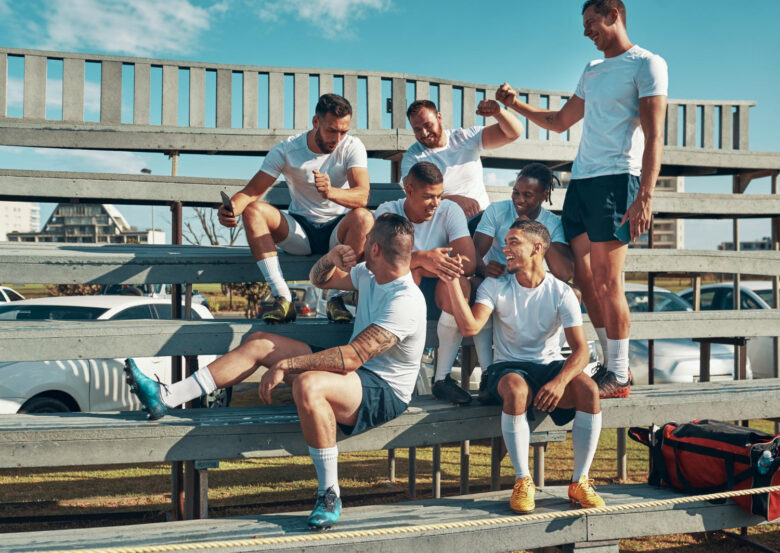
Sports have a unique ability to create bonds that feel deeper, faster, and more enduring than many experiences people encounter in everyday life. Teammates who barely knew each other can feel like family within months. Fans who have never met share instant connection. These bonds are not accidental, and they are not based on nostalgia alone. They are formed through psychological conditions that few real-life environments are able to replicate consistently.
Shared Struggle Accelerates Connection
Most real-life relationships develop gradually through comfort and familiarity. Sports relationships are forged through struggle.
Training sessions that push physical limits, losses that sting collectively, and moments of exhaustion that are endured together compress time emotionally. People bond faster when they face difficulty side by side. Sport provides this difficulty by design.
Shared struggle creates mutual recognition. Teammates see each other at their limits, not curated versions of themselves. Vulnerability is exposed early. This honesty accelerates trust and attachment.
Few everyday environments require people to endure discomfort together repeatedly with a common purpose.
Clear Collective Purpose Removes Ambiguity
In many areas of life, goals are abstract or competing. Workplaces have layered incentives. Social groups lack urgency. Expectations remain vague.
Sport removes ambiguity. The objective is clear. Win, improve, compete, survive the moment together. Everyone knows why they are there and what success or failure looks like.
This clarity simplifies relationships. People align quickly because direction is shared. There is little room for hidden agendas when the goal is visible and immediate.
Purpose unifies behavior. Unified behavior builds connection.
Emotional Intensity Creates Memory Anchors
Sports generate emotional intensity that few everyday events match. Joy, disappointment, relief, frustration, and pride occur in close succession and at high volume.
Strong emotions anchor memory. Experiences tied to emotional peaks are remembered more vividly and more permanently. When those peaks are shared, the memory becomes collective.
Teammates remember not just what happened, but how it felt together. Fans remember where they were, who they were with, and what it meant.
Real-life events often lack this emotional concentration. Sports deliver it regularly.
Vulnerability Is Normalized, Not Hidden
In many social environments, vulnerability is managed carefully. People present controlled versions of themselves to avoid judgment.
Sport disrupts this. Fatigue, failure, and pressure expose vulnerability openly. Missed shots, mistakes, and losses happen publicly. Emotional reactions are visible.
Because vulnerability is shared, it becomes normalized rather than isolating. Teammates accept each other’s weaknesses because they see their own reflected back.
This mutual exposure deepens bonds in ways polite social interaction rarely does.
Identity Becomes Collective, Not Individual
Sports encourage collective identity. Players stop thinking only in terms of self and begin thinking in terms of us.
Jerseys, rituals, language, and shared narratives reinforce belonging. Individual success is meaningful, but collective outcome defines value.
This shared identity reduces social distance. Differences in background, personality, or belief become secondary to the group story.
In everyday life, identity is often fragmented across roles. Sport consolidates identity into something shared and immediate.
Trust Is Tested Repeatedly Under Pressure
Trust deepens when it is tested and confirmed. Sport tests trust constantly.
Athletes rely on teammates for safety, execution, and support. One mistake can affect everyone. One moment of hesitation can undo effort.
Each successful response under pressure reinforces belief in one another. Trust stops being theoretical. It becomes experiential.
Few real-life situations place people in positions where reliance is both necessary and visible on such a regular basis.
Time Is Compressed Emotionally
Sports compress emotional timelines. Experiences that might take years to build elsewhere occur within a season or even a single match.
High stakes accelerate emotional investment. Outcomes matter now. Feedback is immediate. Consequences are shared.
This compression creates a sense of depth that feels disproportionate to actual time spent together. Bonds feel old because they were built quickly under intensity.
Rituals Reinforce Belonging
Rituals play a powerful role in bonding. Pre-game routines, locker room traditions, chants, and post-game habits create continuity.
These rituals signal belonging without explanation. They provide stability amid uncertainty and reinforce group identity.
Real-life rituals often exist, but they rarely carry the same emotional charge or consistency as those in sport.
Rituals turn groups into communities.
Conflict Is Contained by Purpose
Conflict is inevitable in any group. Sport contains conflict within purpose.
Disagreements are resolved quickly because the objective demands it. Ego clashes are often subordinated to collective need. Feedback, even when harsh, is contextualized by shared goals.
This containment prevents resentment from lingering. Conflict becomes functional rather than personal.
In everyday life, unresolved conflict often erodes relationships slowly. Sport forces resolution through necessity.
Achievement Is Shared, Not Abstract
Shared achievement strengthens bonds more than individual success.
Winning together validates effort collectively. Losing together distributes disappointment. Both outcomes reinforce connection.
In many real-life settings, achievement is individual and comparison-driven. Success separates rather than unites.
Sport ties outcome to collective behavior. This linkage deepens relational investment.
Physical Synchronization Enhances Connection
Training and competing together create physical synchronization. Breathing patterns align. Movements coordinate. Timing becomes shared.
This physical alignment has psychological effects. Humans bond more deeply when actions are synchronized.
Marching, dancing, and singing have similar effects. Sport replicates this synchronization continuously.
Few everyday activities create sustained physical alignment among groups.
Shared Narratives Give Meaning Over Time
Sports create stories. Seasons have arcs. Games have turning points. Careers have chapters.
These narratives give relationships continuity beyond isolated moments. People reference shared pasts and anticipate shared futures.
Narrative continuity strengthens bonds because it provides meaning beyond the present.
Many real-life events lack this narrative structure. They happen and fade without collective story.
Emotional Safety Within the Group
Ironically, environments that are physically demanding often feel emotionally safe.
In sport, emotional expression is expected. Anger, joy, disappointment, and relief are understood. There is less need to explain reactions.
This emotional permission creates safety. People feel accepted as they are, not as they should be.
Everyday environments often restrict emotional expression, weakening connection.
Fans Experience Parallel Bonding
The same mechanisms apply to fans. Shared victories, defeats, rituals, and identity create bonds between people who may never interact otherwise.
Supporting the same team creates instant rapport. The shared emotional language shortcuts social barriers.
These bonds persist because they are reinforced repeatedly over time.
Why These Bonds Outlast Participation
Many people remain close to teammates long after careers end. The bond does not depend on current involvement.
It was built under conditions of intensity, vulnerability, trust, and shared meaning. Those foundations do not dissolve easily.
Relationships formed casually often fade. Relationships forged under pressure endure.
Sport as a Rare Social Environment
Modern life often lacks environments that combine purpose, intensity, vulnerability, and repetition.
Sport provides all four.
It creates spaces where people are fully present, emotionally invested, and reliant on each other.
This combination is rare elsewhere.
The Misunderstanding of “Just a Game”
Sports are often dismissed as entertainment. This dismissal misunderstands their psychological function.
They are not just games. They are structured environments for human connection.
The bonds formed are real because the experiences are real.
Why People Miss Sport Even When They Leave It
Athletes often miss the people more than the competition. Fans miss the feeling more than the result.
What is missed is connection. Belonging. Shared meaning.
Those elements are difficult to replace elsewhere.
The Enduring Power of Shared Experience
Sports create stronger bonds than many real-life events because they compress what usually takes years into moments that matter.
They demand presence. They reward trust. They expose vulnerability. They build identity.
These are the ingredients of deep connection.
When people look back on their lives, they often remember not just what they did, but who they shared it with.
Sport ensures that those shared moments are intense enough to last.
That is why the bonds formed through sport feel different.
And why, long after the final whistle, they still matter.